Irrigation pump repair and replacement for ground water wells, lake-drawn surface pumps, pressure tanks, and booster pumps — diagnosed properly before anything gets replaced.
What is your pump doing right now?
The pump runs but nothing comes out, or it will not hold prime.
Trace the suction line Pressure fades every springStrong through winter, then weak by May as the water table drops.
Well pump service Heads mist instead of throwRotors stall out and the far corner of the yard never gets wet.
Booster pump sizing Runs nonstop or short cyclesRapid on-off clicking, or the pump simply never shuts itself down.
Relay & switch diagnosisTampa Bay properties pull irrigation water three different ways, and each one fails differently. Pick the system that matches your property to jump straight to what we do about it.
Pump won't hold prime?
A self-priming centrifugal pump on a pad, drawing from a lake, pond, or canal. Most failures start in the suction line, not the motor.
Lake-drawn pump repair →
Losing pressure every dry season?
A shallow well jet pump, sand point, or deep well submersible pumping ground water from the aquifer under your property.
Well pump service →
Sprinklers misting instead of throwing?
City or reclaimed water arriving with too little pressure to run your heads properly. A booster pump raises PSI to where it should be.
Booster pump installation →Tampa Bay landscapes pull irrigation water three different ways — from a lake or pond, from ground water in a well, or from a pressurized city or reclaimed line that needs a boost. Each source uses a different pump, fails in a different way, and needs a technician who knows the difference.
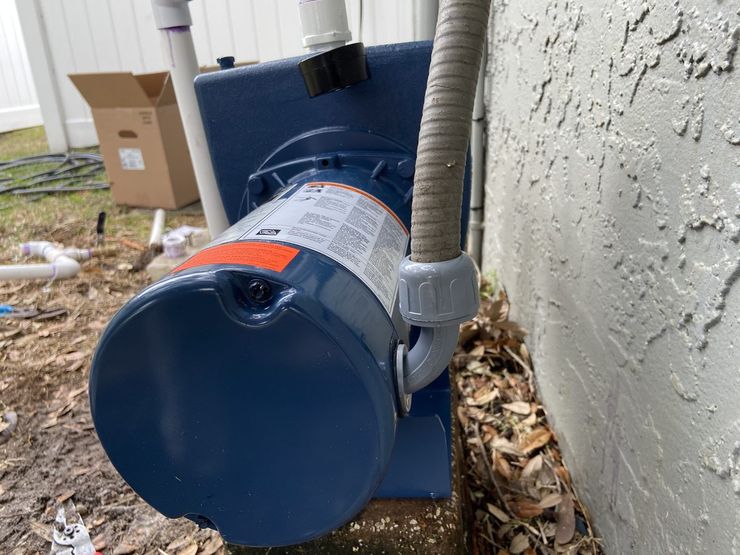
If your property backs up to a lake, pond, or canal, you are almost certainly running a lake-drawn irrigation pump — a self-priming centrifugal pump mounted on a pad above the water line that pulls from a submerged intake. It is the cheapest water in Florida and the most exposed equipment we service: everything sits outdoors, and everything the lake carries passes through the intake.
Because a surface pump lifts water by suction, most lake pump failures start on the intake side rather than in the motor. We trace the whole suction path before touching the pump itself.
We service lake-fed and pond-fed systems throughout Lake Magdalene, Odessa, Land O' Lakes, Keystone, and the waterfront neighborhoods of Hillsborough and Pasco County. Residential lake irrigation stays well under the 100,000-gallon-per-day threshold that triggers a water use permit, so most homeowners need no permitting to keep an existing lake pump running.
Most Tampa Bay irrigation wells tap ground water from the shallow surficial aquifer, and our sandy soil makes that water easy to reach. In this market a well under roughly 50 feet counts as shallow and runs an above-ground jet or centrifugal pump that lifts water by suction. Deeper wells need a submersible well pump set down inside the casing, which pushes water up instead of pulling it.
That distinction drives every repair decision. A driven 2-inch sand point cannot physically accept a submersible pump — those units need a 4-inch casing — so sand point systems are always served at the surface, where diagnosis and repair are faster and cheaper. Submersible repairs require pulling the pump from the casing with a service truck and proper rigging.
Well pumps in this market typically last 15 to 25 years. When one reaches the end, we size the replacement to your well's actual yield and your system's zone demand rather than simply matching the horsepower that was there before.
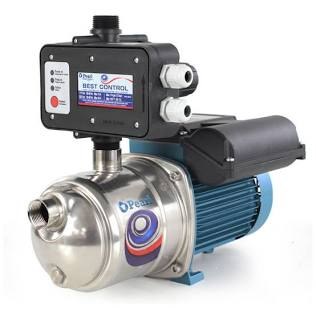
When sprinklers mist instead of throw, rotors stall, or the far corner of the yard never gets wet, the supply usually is not delivering enough pressure. An irrigation booster pump solves that by raising the pressure of an existing city, well, or reclaimed water supply. Most residential and commercial systems need 30 to 50 PSI at the head, and a properly sized booster typically adds 20 to 30 PSI.
One point matters more than any other: a booster pump raises pressure, not flow. It cannot create gallons per minute that your supply does not produce. Undersized or misapplied boosters are the most common pump failure we are called to replace, so we measure before we recommend.
Correctly sized and installed on clean water, a booster pump lasts 8 to 15 years. We also check for the alternatives first: sometimes upsizing a restrictive supply line or splitting an overloaded zone fixes the pressure problem without adding a pump at all.
Free Homeowner Resource
Want to understand your system before you call anyone? Our well pump guide walks through how these systems actually work, the warning signs worth acting on, honest repair-versus-replace math, and what a replacement really costs in Tampa Bay — written by our owner, not a content mill.
From diagnosis to restoration, we handle every well pump, lake pump, and booster pump service need.
We inspect the pump, pressure tank, suction line, and all connections to identify any issues.
Using specialized equipment, we measure PSI and flow to determine if repair or replacement is needed.
We perform repairs with quality parts or install a new pump system if replacement is necessary.
Full system testing ensures proper pressure, flow rate, and reliability before we finish.
Every lake-drawn, ground water, and booster pump system needs the controller and the pump to agree. When they stop agreeing, the pump is usually the part that pays for it.
Because a lake or well is not a pressurized source, the pump has to be told when to run. Your irrigation controller sends a low-voltage 24V signal to a pump start relay, and the relay closes the 120V or 240V circuit that actually powers the pump for the length of the cycle. It is a small part with an outsized effect: when a relay fails, the symptom looks exactly like a dead pump.
We diagnose the whole control path — controller output, relay coil and contacts, pressure switch, and pump wiring — instead of replacing a pump that was never the problem.
Need broader system help? See our smart irrigation controller and sprinkler repair services, or read the full well pump service guide.
Most well pumps last 15-25 years depending on use and maintenance. Regular service extends lifespan significantly.
Low water pressure, strange noises, inability to start, or inconsistent flow are signs of pump problems. Call immediately if you notice these.
Yes! We specialize in lake-drawn irrigation systems and surface pump maintenance for Florida properties, including self-priming centrifugal pumps, suction lines, foot valves, and intake strainers on lake, pond, and canal-fed systems.
In Tampa Bay, a well under about 50 feet is considered shallow and is usually served by an above-ground jet or centrifugal pump that lifts ground water by suction. Deeper wells need a submersible pump set inside the casing, which pushes water up instead of pulling it. A 2-inch sand point cannot accept a submersible, so those systems always use a surface pump.
A booster pump raises pressure, not flow. Most irrigation systems need 30-50 PSI at the head, and a properly sized booster pump typically adds 20-30 PSI to a weak city or reclaimed water supply. If your system is short on gallons per minute rather than pressure, the fix is zone redesign or a larger supply line, so we test pressure and flow before recommending a booster.
Yes. Reclaimed water pressure often sags during peak morning irrigation hours in neighborhoods like Westchase and Wesley Chapel. We install and service booster pumps on reclaimed lines so rotors and sprays reach their rated pressure throughout the cycle.
Constant running and rapid on-off cycling usually trace back to a waterlogged pressure tank, a mis-set pressure switch, or worn pump start relay contacts. Left alone, both conditions overheat the motor and shorten pump life, so we test the tank pre-charge, switch settings, and relay voltage during every pump diagnosis.
Submersible pump replacement typically costs $1,500-3,500. Surface pumps may cost $2,000-4,000. We provide estimates for your specific system.
Yes! Regular maintenance prevents problems and extends pump life. We offer seasonal inspections and maintenance packages.
We service ornamental and fountain pumps as well, ensuring your water features operate beautifully year-round.
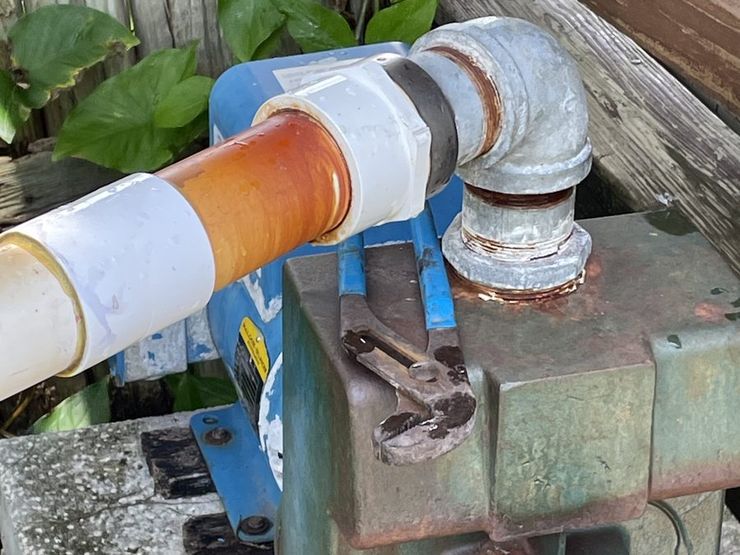
Don't let a failing pump disrupt your irrigation. Call us for expert diagnosis, repair, or replacement of ground water, lake-drawn, and booster pump systems.